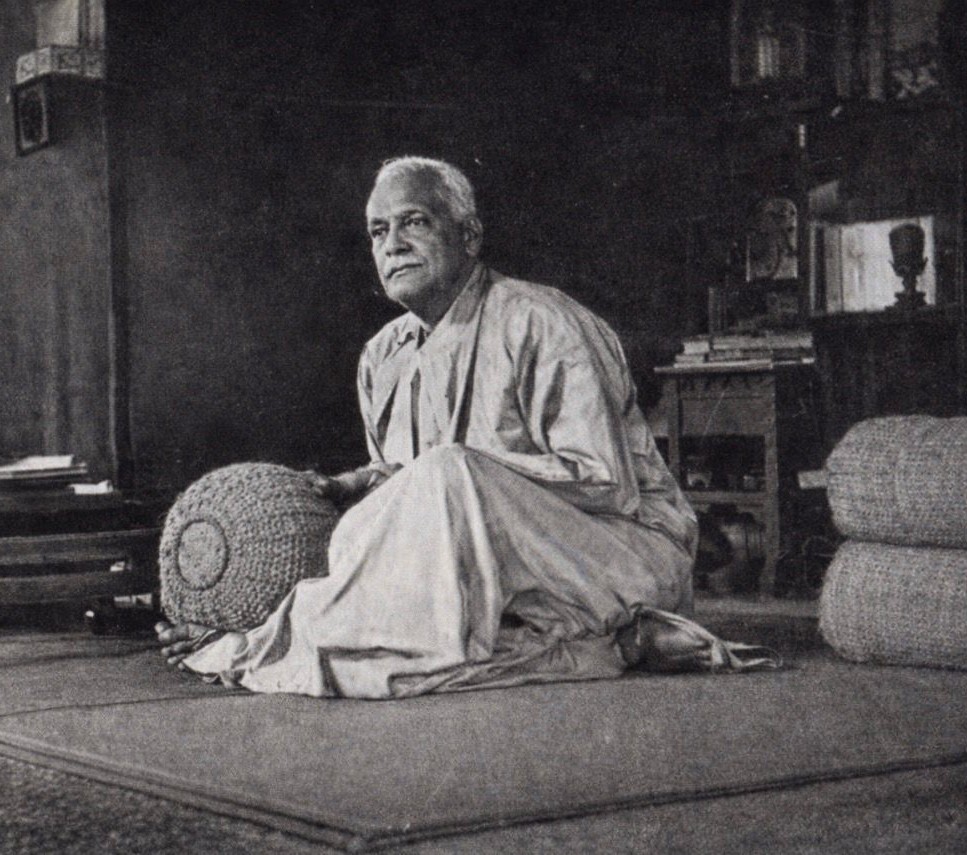
Profile:
Gaganendranath Tagore occupies a distinctive position in the history of modern Indian art as one of the earliest artists to engage critically with Cubism and caricature within an Indian context. Born in 1867 in Kolkata, he belonged to the illustrious Tagore family and was the elder brother of Abanindranath Tagore. While Abanindranath led the revivalist ethos of the Bengal School, Gaganendranath pursued a more experimental and modernist trajectory.
Largely self-taught, Gaganendranath initially worked within the framework of the Bengal School, absorbing influences from Japanese ink traditions and wash techniques. However, by the second decade of the twentieth century, he moved toward a radically different visual language, becoming one of the first Indian artists to incorporate Cubist principles—fragmentation of form, shifting perspectives, and spatial ambiguity—into his practice. His paintings from this period demonstrate a sophisticated engagement with light, structure, and architectural space, anticipating later developments in Indian modernism.
Equally significant is his contribution to satirical art and caricature. Through albums such as Realm of the Absurd (1917), Play of Opposites (1917), and Reform Screams (1921), Gaganendranath offered sharp visual critiques of colonial society, social pretensions, and the contradictions of the emerging Bengali middle class. His humour was subtle yet incisive, positioning him as one of India’s earliest modern cartoonists.
Gaganendranath was closely associated with the Indian Society of Oriental Art, playing an important role in promoting artistic dialogue and exhibitions in early twentieth-century Bengal. His works were exhibited internationally, including in Japan and Europe, where they were recognised for their originality and intellectual depth.
In the broader narrative of Indian art, Gaganendranath Tagore represents a crucial bridge between revivalism and modernism. His pioneering engagement with Cubism and satire situates him among the earliest proponents of a truly experimental modern Indian visual language, distinct from both academic realism and nationalist romanticism.