Profile:
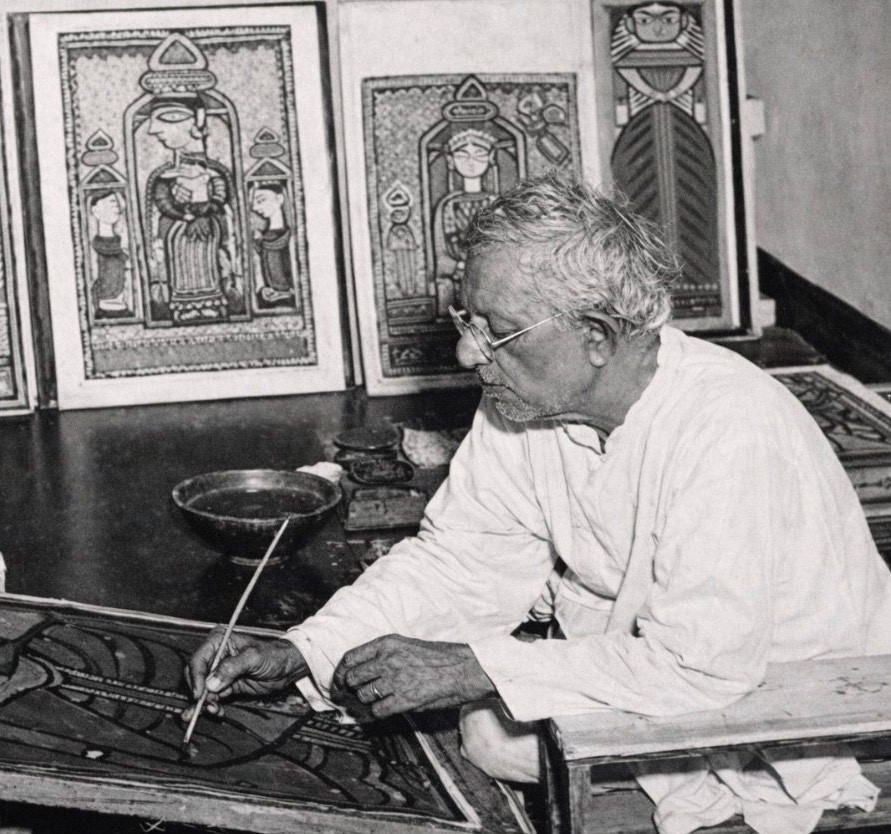
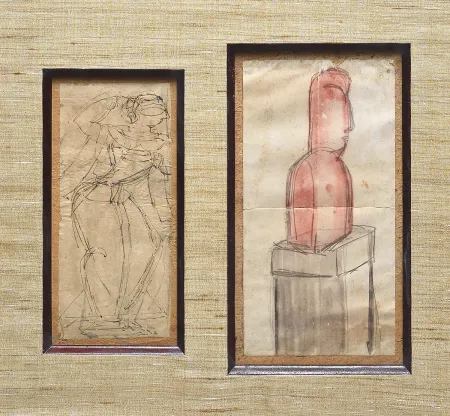
Jamini Roy stands as one of the most influential figures in modern Indian art, celebrated for his radical redefinition of artistic language through a return to indigenous visual traditions. Born in 1887 in Beliatore, Bengal, Roy received formal training at the Government School of Art, Calcutta, where he was initially educated in European academic realism.
By the 1920s, Roy consciously rejected Western academic conventions, turning instead toward the folk and vernacular traditions of Bengal, particularly the Kalighat pat painting and rural artisanal practices. This shift marked a decisive moment in Indian art, as Roy sought to create a visual language that was distinctly Indian, accessible, and rooted in the cultural ethos of the people.
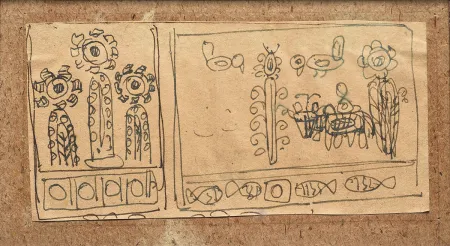
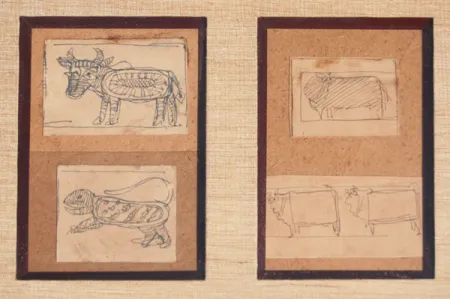
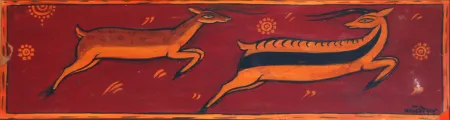
Roy’s paintings are characterised by bold, simplified forms, strong contour lines, and flat planes of colour, often rendered using natural pigments on materials such as cloth, wood, and handmade paper. His subjects frequently include Krishna legends, Ramayana narratives, Santhal dancers, mother-and-child motifs, and rural life—imbued with a sense of rhythmic harmony and spiritual quietude.
A key aspect of Roy’s philosophy was the democratisation of art. He deliberately kept his works affordable and reproducible, challenging the elitism of art markets and bringing art closer to everyday life. His stylistic clarity and repetition of motifs created a visual vocabulary that was both iconic and widely recognisable.
Roy’s contribution was recognised nationally and internationally. He was awarded the Padma Bhushan in 1955 by the Government of India, and his works are housed in major institutions including the National Gallery of Modern Art, New Delhi, as well as numerous private and international collections.
Jamini Roy’s legacy lies in his successful synthesis of modernism and folk tradition, establishing a uniquely Indian modern aesthetic that continues to influence generations of artists. His work remains a cornerstone in the narrative of twentieth-century Indian art.